Many buyers assume that in Oklahoma you can build almost anything on your own land. That is true in some places and wrong in others. Barndominium zoning in Oklahoma depends on three separate layers: city or county land-use rules, private deed restrictions recorded against the property, and the permits that apply to the site itself. A parcel can pass one layer and fail another. This guide explains how each layer works, where barndominiums usually run into problems, and what to check before you buy land or pay for plans.
The Short Answer: It Depends on Three Separate Layers
There is no single statewide rule that says a barndominium is allowed or banned. So where can you build a barndominium in Oklahoma? The answer comes down to where the land sits and what is recorded against it.
- Public land-use rules: city zoning inside city limits, and county rules (if any) outside them
- Private restrictions: deed restrictions, subdivision covenants and HOA rules that travel with the land
- Site requirements: building permits, septic approval, floodplain rules and trade inspections
Each layer is checked separately. A county with no zoning does not cancel a covenant that bans metal siding, and a covenant that welcomes barndominiums does not remove a city’s design standards.
How Barndominium Zoning Works in Oklahoma
Oklahoma zoning laws leave most land-use decisions to local governments. Cities and towns adopt their own zoning codes, so the rules in one municipality can look nothing like the rules ten miles away. Counties vary even more, and some have no zoning at all for unincorporated land.
Most zoning codes do not mention barndominiums by name. Instead, they define what counts as a “single-family dwelling” and list which uses are allowed in each district. A barndominium is usually treated as a single-family home, so the real question is whether the parcel’s zoning district allows a house and whether the design meets that district’s standards.
Agricultural and Residential Districts
Agricultural and rural residential districts are often an easier fit, because they commonly allow a home plus accessory buildings. Higher-density residential districts on smaller lots are where design rules and setbacks start to limit what you can build.
Before you rely on a district name, ask the planning office for the written district standards. The same label can carry different rules from one city to the next.
Can You Build a Barndominium in City Limits in Oklahoma?
Often yes, but city limits are where a barndominium is most likely to meet resistance. Cities use zoning and design ordinances to keep neighborhoods visually consistent, and a steel-framed home with metal siding can fall outside those standards.
City-level hurdles can include:
- Minimum roof pitch requirements that rule out low-slope metal roofs
- A required share of masonry, brick or stone on the front of the house
- Limits on exposed or unfinished metal siding on homes
- Rules on the size and height of shops and accessory buildings
- Setbacks and lot coverage limits that affect a large footprint
In larger cities, the planning department is the first call. If you are looking at land in the metro, working with barndominium builders in Oklahoma City who know the local review process can save a round of redesign. Where a design standard is the issue, ask the planning department what exterior changes would meet it before drawings go in.
Tulsa adds its own layer through floodplain management. The city keeps regulatory floodplain maps that are more conservative than FEMA’s, so a lot that looks buildable on a federal map may still face stricter rules. Tulsa barndominium builders check those maps alongside zoning before a plan is finalized.
Not sure what your city or county allows?
Building Outside City Limits: County Rules in Oklahoma
Unincorporated land is where the rules tend to be lightest. Some counties have no zoning in unincorporated areas at all. Lincoln County, for example, states that it has no zoning in unincorporated areas and does not require residential building permits there. Custer County has said the same about zoning and building permits outside city limits.
That does not mean there are no rules. Counties without zoning may still require permits for driveway connections to county roads, and state law continues to apply to every property.
- On-site sewage systems need approval through the Oklahoma Department of Environmental Quality
- Electrical, plumbing and mechanical work is still subject to state licensing and code requirements
- Floodplain development rules apply where a community or county participates in the National Flood Insurance Program
- Recorded deed restrictions still bind the land, whatever the county does
Other counties do zone unincorporated land. The only reliable answer is to ask the county directly, in writing, which permits and setbacks apply to your parcel.
Land Near a City Boundary
Parcels near a city edge need extra care. Annexation can bring land inside city limits, which changes the rules that apply. Confirm the parcel’s current jurisdiction with both the city and the county before you assume county rules apply.
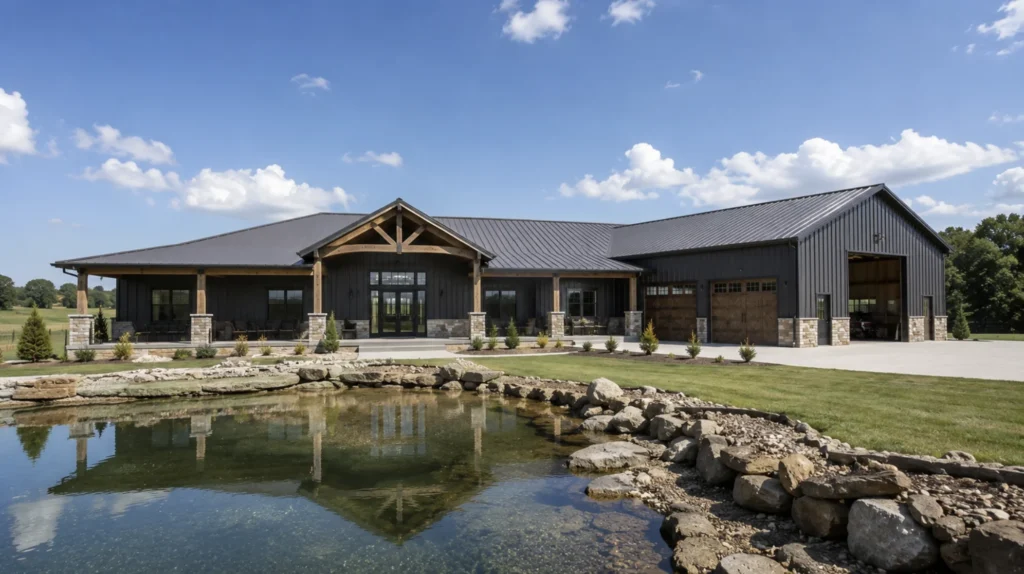
Deed Restrictions and Covenants: The Rules Buyers Often Miss
Deed restrictions are private rules recorded against the property, usually by the original developer. They can be stricter than any public rule, and a city or county permit does not override them. They also bind every future owner, so buying the land means accepting them.
Covenants that affect barndominiums commonly cover:
- Minimum home size, such as a required number of finished square feet
- Exterior materials, including bans or limits on metal siding
- Bans on mobile, manufactured or modular homes, which can be worded broadly
- Limits on outbuildings, shops, livestock or commercial use
- Architectural review before construction
Covenants vary widely. Some Oklahoma subdivisions explicitly allow barndominiums as long as the home meets a minimum size, while others limit metal exteriors. The wording matters, so read the recorded document rather than relying on a listing description or a seller’s summary.
HOA Rules
Where a homeowners association exists, it may enforce its own architectural guidelines on top of the recorded covenants. Ask for the current covenants, bylaws and any design guidelines before you make an offer. If you are looking at suburban lots north of Oklahoma City, barndominium builders in Edmond can review what a subdivision’s documents allow before you commit.
Other Local Requirements That Shape What You Can Build
Zoning and covenants decide whether a barndominium is allowed. Site requirements decide where it can go and how it must be built.
- Building codes: Oklahoma sets statewide minimum residential codes, and local jurisdictions can administer permits and inspections
- Septic: the soil and site must support an approved on-site system where there is no sewer
- Floodplain: development in a mapped flood hazard area usually needs a floodplain permit
- Easements: utility, pipeline and access easements limit where structures can sit
- Road access: legal access and any county driveway permit need to be confirmed
These items often move the building site even when the land is zoned correctly. A septic dispersal area, an easement or a drainage path can take up more of a parcel than buyers expect. That is why land selection and site evaluation support is most useful before the purchase closes, not after.
Need help checking a parcel before you buy?
Common Mistakes When Checking Barndominium Zoning
Most zoning problems come from assumptions rather than unusual rules.
- Assuming rural land has no restrictions because the county has no zoning
- Relying on a listing that says “barndos allowed” without reading the covenants
- Checking city zoning but not the city’s design standards
- Buying land before confirming septic suitability and legal access
- Ordering a steel building package before the site and permits are confirmed
Each of these can lead to a redesign, a denied permit or a parcel that cannot be used as planned. If you want to build on your land in Oklahoma, confirm every layer in writing before money changes hands.
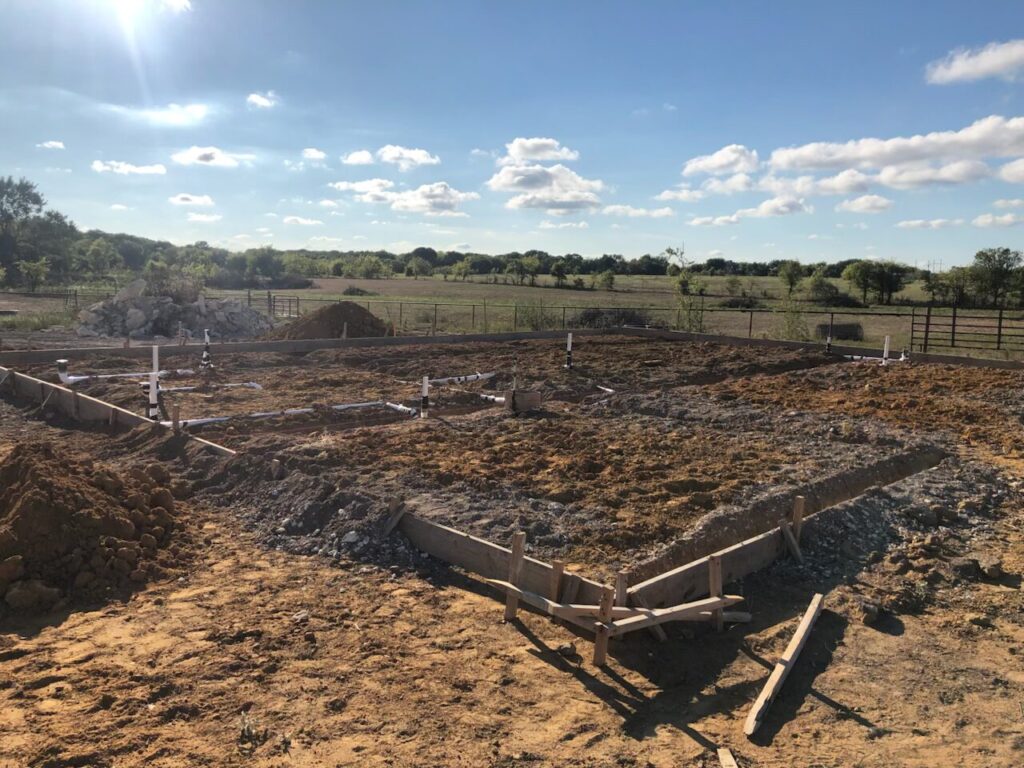
A Practical Checklist Before You Buy Land for a Barndominium
- Confirm whether the parcel is inside city limits or in unincorporated county land
- Get the zoning district and its written standards from the planning office
- Ask about design standards for roof pitch, exterior materials and accessory buildings
- Order the recorded deed restrictions, plat and any HOA documents
- Check septic suitability, floodplain status and recorded easements
- Confirm legal road access and any driveway permit requirements
Working through this list early lets you compare parcels on what they actually allow. It also gives your builder the information needed to design a home that passes review the first time. Experienced barndominium builders in Oklahoma will ask for most of these documents before drawing a plan.
How Zoning Fits Into the Wider Oklahoma Build Process
Zoning is one part of a longer sequence that includes land evaluation, design, engineering, permitting and construction. Our complete guide to building a barndominium in Oklahoma walks through each stage in order.
The state’s mix of urban, suburban and rural jurisdictions is also one reason Oklahoma builds need local checking. For more on how that variation affects soils, weather and permits, see our article on what makes building a barndominium in Oklahoma different.
Conclusion
You can build a barndominium in much of Oklahoma, but not on every parcel and not always in the form you first imagine. City zoning and design standards, county land-use rules, recorded deed restrictions and site requirements each have to be cleared on their own. Rural land without county zoning can still carry covenants that ban metal siding, and a well-zoned city lot can still fail on roof pitch or masonry rules. The safest approach is to confirm every layer in writing before buying land or ordering plans. That way, the design starts from what the property actually allows.
Frequently Asked Questions
Are barndominiums legal in Oklahoma?
Yes, barndominiums are legal in Oklahoma, and there is no statewide ban on them. Whether you can build one on a specific parcel depends on local zoning, design standards and any recorded deed restrictions. The building also has to meet the residential codes and permit requirements that apply where it sits.
Can you build a barndominium in city limits?
In many cities you can, as long as the zoning district allows a single-family home and the design meets local standards. Some cities set roof pitch, masonry or exterior material requirements that affect metal-sided homes. Check with the planning department before drawings are prepared.
Do I need a permit to build a barndominium in rural Oklahoma?
It depends on the county. Some counties do not require residential building permits in unincorporated areas, while others do. State rules for septic systems, licensed trades and floodplain development still apply, so confirm requirements with the county in writing.
Can an HOA stop me from building a barndominium?
Yes, if the recorded covenants or HOA rules prohibit it. Covenants can set minimum home sizes, ban metal siding or require architectural approval, and a public permit does not override them. Read the recorded documents before you buy a lot in a subdivision.
How do I find deed restrictions on Oklahoma land?
Deed restrictions are recorded with the county clerk where the land is located. A title or abstract examination should list them, along with easements and other recorded documents. For subdivision lots, also ask for the plat and any HOA documents.