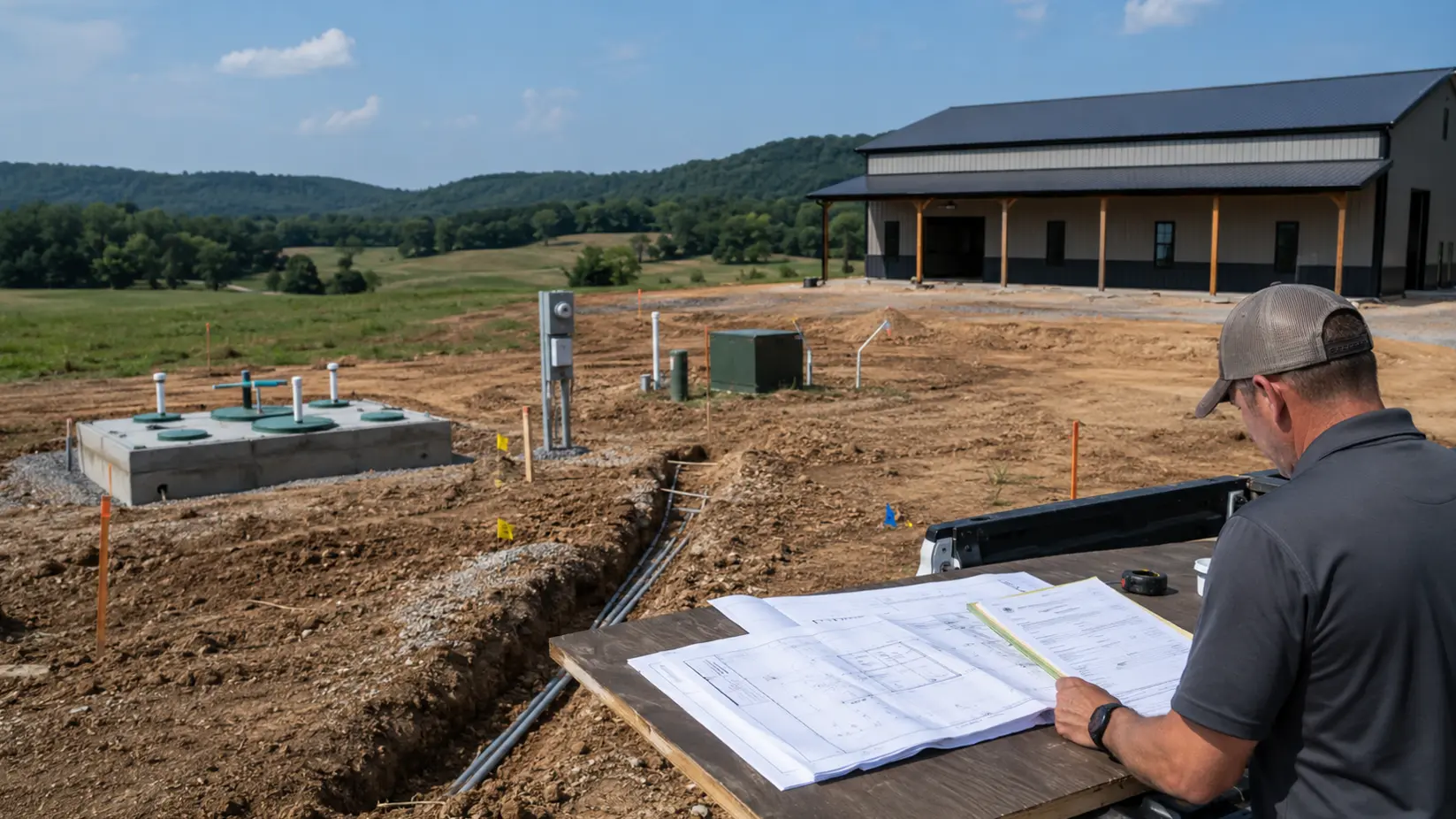
Most barndominiums in Oklahoma are built on rural land with no city sewer line, which means the home needs its own septic system. Before that system goes in, the soil has to be tested, the results reported to the state, and the right system type approved for the lot. This guide explains how septic systems for Oklahoma barndominiums are approved, what a soil test and a 581 report involve, which system types are common, and what happens on site before installation begins. If you are still choosing land, these steps can also tell you whether a parcel will work at all.
How Septic Approval Works in Oklahoma
Septic systems in Oklahoma are regulated by the Oklahoma Department of Environmental Quality, usually shortened to DEQ. The rules sit in Title 252, Chapter 641 of the Oklahoma Administrative Code, which covers the design, construction, installation and operation of individual and small public on-site sewage treatment systems.
In plain terms, a septic system is an on-site sewage treatment system. Wastewater leaves the home, solids settle in a tank, and the liquid is treated and dispersed into the soil or another approved area on the property. Because the soil does much of the treatment work, the state wants to know how that soil behaves before anything is installed.
The basic order of events looks like this:
- A qualified person tests the soil on the proposed dispersal site, unless a lagoon or certain aerobic spray systems are chosen
- The results are reported to DEQ on the correct form
- DEQ’s report confirms which system types the lot allows
- A system is chosen, designed and installed to match
- The installation is inspected before it is covered or put into use
These steps happen early in the build, often before the house plan is final. It is worth understanding them before you commit to land, which is one reason land selection and site evaluation support in Oklahoma usually includes a first look at septic suitability.
What Is a 581 Report in Oklahoma?
The “581” is the name most people use for DEQ’s Report for On-Site Sewage Treatment. According to Oklahoma State University Extension, this report determines what types of on-site systems are allowed for the property. The findings depend on the size and shape of the lot, the size of the home and the results of the soil test.
There are two versions of the form, and which one is used depends on the type of soil test:
- Form 641-581P: used to report a percolation test
- Form 641-581SP: used to report a soil profile description
The person who carries out the soil test and completes the 581P or 581SP is called the “designer” under the DEQ rules. For a perc test, the report includes the name, signature and registration number of the person who ran it, along with the test date.
Why the 581 Matters for a Barndominium
A barndominium often has more square footage than a typical rural home, especially once living space and shop space are combined. Home size is one of the factors in the 581, so the number of bedrooms and the layout can affect which systems the lot will support. Settling the plan and the septic approach together avoids having to redesign one around the other later.
Soil Testing for Septic Systems in Oklahoma
Oklahoma uses two main soil tests for septic systems. Both are meant to answer the same question: can this soil safely absorb and treat wastewater?
The Percolation Test
A percolation test, or perc test, measures how quickly water soaks into the soil. Test holes are dug in the proposed dispersal site, the soil is soaked, and the drop in water level is timed.
Key points from the DEQ rules:
- A perc test can only be used to identify dispersal sites for conventional subsurface absorption fields
- Three test holes are used, and the rates are normally averaged
- If any two holes vary by more than fifteen minutes, the slowest hole sets the rate for the site
- Perc tests cannot be used in a Water Body Protection Area or a scenic river corridor
Under the DEQ rules, soil tests can be carried out by professional engineers, professional land surveyors, professional sanitarians or environmental specialists registered in Oklahoma, soil scientists, and DEQ environmental program specialists.
The Soil Profile
A soil profile is a closer look at the soil layers themselves. The soil’s texture and color are recorded in 6-inch steps from the surface down to 48 inches, or until a layer that restricts water flow is found.
Soil profiles can only be carried out by a DEQ-certified soil profiler or by DEQ staff. DEQ keeps a list of certified soil profilers on its website. Because a soil profile describes how deep usable soil goes, it can open up system options that a perc test alone cannot.
What Soil Tests Often Find on Oklahoma Land
Oklahoma soils vary a great deal from one region to the next, and that variety shows up in septic results. Dense clay subsoils can slow absorption, while shallow rock or a high water table can limit how deep a system can go. The same soil traits that shape a septic layout also shape the slab, which is why our guide on how Oklahoma soil conditions affect barndominium foundations is worth reading alongside this one.
Lot Size and Setback Rules for Oklahoma Septic Systems
Lot size is one of the factors that decides which systems are allowed. Oklahoma State University Extension gives these typical minimums:
- About 0.5 acres when the home uses a public water supply
- About 0.75 acres when the home uses a private water well
The full lot size requirements by system type are set out in an appendix to the DEQ rules, so the exact figure for a given system should always be checked there or with the local DEQ office.
There are also separation distances between the septic system and features such as water wells, property lines and buildings. These setbacks are one reason the location of the home, the septic field and the well should be planned at the same time. If you are still weighing a well against a rural water connection, our article on water wells vs rural water in Oklahoma explains how that choice affects the rest of the site.
Water Body Protection Areas
Some Oklahoma land sits within a Water Body Protection Area, set aside for extra protection of designated lakes and rivers. Perc tests cannot be used in these areas, so a soil profile is needed instead. Oklahoma State University Extension notes that sites within 660 feet of a listed water body or scenic river corridor need an advanced system with nitrate reduction, which adds cost.
Not sure if your land will pass a septic soil test?
Common Septic System Types for Oklahoma Barndominiums
Oklahoma State University Extension notes that there are several types of on-site systems ordinarily permitted in the state. The right choice depends on the soil test, the lot and the size of the home.
Conventional Subsurface Absorption Fields
This is the system most people picture when they hear “septic.” Wastewater flows from a septic tank into buried lines in trenches, and the soil treats it as it soaks away. A conventional field needs soil that absorbs water at a suitable rate, which is why a perc test can be used to approve one.
Aerobic Treatment Systems
An aerobic treatment system uses air to break down waste more fully before the treated water is dispersed. These systems can work where soil conditions rule out a conventional field. They have mechanical parts and need ongoing maintenance.
According to Oklahoma State University Extension, the installer of an aerobic treatment system must maintain it at no extra cost for two years after installation. Most other system types do not come with a required warranty.
Other Approved Options
DEQ also recognizes lagoon systems and evapotranspiration/absorption systems, each with their own soil and lot size requirements. Which ones apply to a given property is something the 581 report and the designer will confirm. It is a mistake to assume a system that worked on a neighbor’s land will be approved on yours, because soil can change across a single fence line.

What Happens Before Septic Installation Begins
Once the 581 is complete and a system type is chosen, a few more steps take place before the system is in the ground.
1. Permit Application
The septic permit, which DEQ calls an Authorization to Construct, can be requested online or through a local DEQ office, and installers often handle it for you. It relies on the soil test and the report already completed for the site. Septic approval sits alongside the other paperwork for a rural build, which our guide to Oklahoma barndominium building codes and permits covers in more detail.
2. Site Layout
The tank, lines and dispersal area are marked out in relation to the home, driveway, well and property lines. Separation distances are checked at this stage. The layout also needs to keep heavy equipment off the dispersal area during construction, since compacted soil absorbs water poorly.
3. Choosing an Installer
Oklahoma State University Extension recommends using a DEQ-certified septic installer. Certified installers can self-inspect the systems they install, and DEQ requires their final inspection reports within 15 days of completion. Where a DEQ inspection is needed, the installer is responsible for requesting it.
DEQ has also tightened the rules for uncertified installers. Since November 1, 2025, a person who is not certified through DEQ may only install one on-site sewage treatment system per calendar year.
4. Inspection Before the System Is Covered
The system has to be inspected and approved before it is backfilled or put into operation. With a certified installer, that self-inspection is part of their role. Otherwise, a DEQ inspection is needed. Skipping this step can delay the build and cause problems when the property is sold or financed.
Want your septic system planned into the site from the start?
How Septic Planning Fits Into a Barndominium Build
Septic work touches several parts of a barndominium project. The soil test affects the system type, the system type affects the site layout, and the site layout affects where the home and shop can sit.
Building on rural land usually means coordinating several of these decisions at once:
- Where the home, shop and driveway go on the parcel
- Where the well or rural water line enters the property
- Where the septic tank and dispersal area can legally sit
- How drainage is directed away from both the slab and the septic field
Experienced barndominium builders in Oklahoma will usually ask about septic suitability before they talk about floor plans. That order of questions saves time, because a site plan that ignores the septic field often has to be redrawn.
Keeping Septic Work in Step With the Rest of the Build
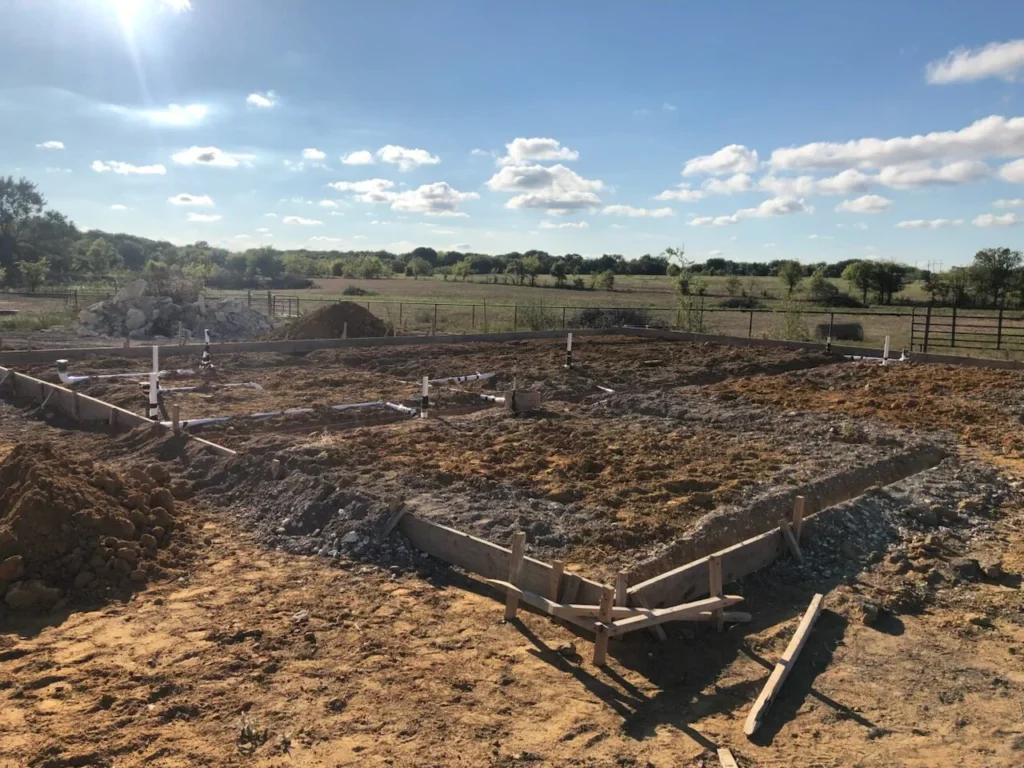
Septic installation is often scheduled around grading, foundation work and utility trenching. If those stages are handled by separate contractors, the septic area can end up compacted by trucks or crossed by a trench. Working with a turnkey barndominium builder in Oklahoma keeps those stages on one schedule, so the dispersal area is protected while the rest of the site is built.
Common Septic Mistakes on Oklahoma Barndominium Projects
A few mistakes come up again and again on rural builds. Most of them are avoidable with early planning.
- Buying land before a soil test: a parcel may not support the system you expect, or any conventional system at all
- Designing the home first: a large footprint or extra bedrooms can change what the 581 allows
- Placing the well without the septic in mind: setbacks between the two can rule out the best building spot
- Driving over the dispersal area: compaction from heavy equipment reduces how well the soil absorbs water
- Using an uncertified installer: this adds inspection steps and, since late 2025, limits how many systems they can install each year
Conclusion
Septic systems for Oklahoma barndominiums are approved through a clear process: a soil test by a qualified person, a 581 report that sets out which systems the lot allows, a permit, and an inspected installation. Lot size, home size and soil conditions all shape the result, and setbacks from wells, buildings and property lines decide where the system can go. The best time to look at septic suitability is before you buy land and before the floor plan is final. Getting it right early keeps the rest of the build on schedule.
Frequently Asked Questions
What is a 581 in Oklahoma?
A 581 is the DEQ Report for On-Site Sewage Treatment. It records the results of a percolation test (Form 641-581P) or a soil profile (Form 641-581SP) and determines which septic system types are allowed on the property. Lot size, home size and soil test results all factor into it.
Do I need a perc test to build in Oklahoma?
In most cases you need a soil test before a septic system can be approved, but it does not always have to be a perc test. A perc test can only be used for conventional subsurface absorption fields. A soil profile by a DEQ-certified soil profiler is the other option and can support a wider range of systems.
How much land do you need for a septic system in Oklahoma?
Typical minimums are about half an acre with public water and about three-quarters of an acre with a private well, according to Oklahoma State University Extension. The exact requirement depends on the system type and is set out in the DEQ rules.
Can I install my own septic system in Oklahoma?
It is possible, but the rules are stricter than they used to be. Since November 1, 2025, anyone not certified through DEQ may only install one on-site sewage treatment system per calendar year, and the system still needs a DEQ inspection before it is covered or used. A DEQ-certified installer can self-inspect their own work.
Do aerobic septic systems need maintenance in Oklahoma?
Yes. Aerobic treatment systems have mechanical parts and need regular maintenance to work properly. The installer must maintain the system at no extra cost for two years after installation.