A barndominium foundation carries a steel frame, a full home and often a working shop, so the ground beneath it matters as much as the design above it. Soil changes a lot from one region of Oklahoma to the next. Some parcels sit on expansive clay that swells and shrinks with moisture, others on rocky ground that is hard to dig, and many on a mix of both. This guide explains the main soil conditions found across the state, how each one affects the foundation, and what to check on your land before the slab is designed.
Why Soil Matters More Than Most Buyers Expect
A foundation sits between moving ground and a fairly rigid building. If the soil moves unevenly, the slab can crack, doors can stick and finishes can separate. Steel framing does not prevent this, because the frame still rests on the foundation.
Most soil-related foundation problems come from three things:
- Soil that changes volume as its moisture content changes
- Soil that is soft, loose or poorly compacted fill
- Water that collects around the foundation instead of draining away
Each of these can be planned for. The problem is not difficult soil itself. It is designing a foundation without knowing what the soil is.
Oklahoma Soil Types: A Quick Overview
Oklahoma soil types range widely across the state, shaped by different parent rock, rainfall and terrain. Oklahoma’s state soil, Port silt loam, is reddish all the way to the surface, which hints at how much iron-rich material sits in the ground in parts of the state.
For foundation planning, the most useful way to group soil is by behavior rather than name:
- Expansive clays that swell when wet and shrink when dry
- Red bed soils weathered from iron-rich clays, shales and sandstones
- Rocky and shallow soils where bedrock sits close to the surface
- Bottomland soils near rivers and creeks that may be wet or flood-prone
Why So Much Oklahoma Soil Is Red
The red color comes mainly from iron oxides. In western and south-central Oklahoma, much of the soil weathered from Permian red beds, which are red clays, shales and sandstones coated with iron oxide. Oklahoma State University soil scientists note that the state’s warm, fairly dry climate helps preserve that iron in the soil.
Shrink-Swell Soil and Barndominium Foundations
Expansive clay is the soil condition most often linked with foundation problems in Oklahoma. Clay particles take on water and expand during wet periods, then lose water and contract during dry spells. The amount of movement depends mostly on the type and amount of clay in the soil.
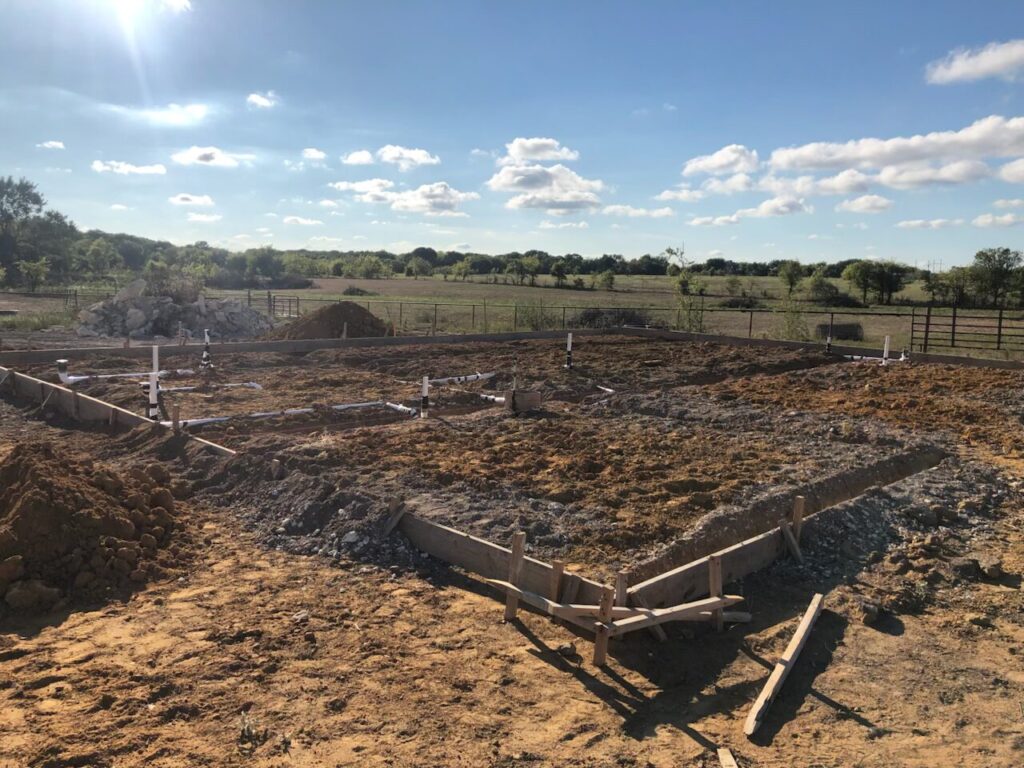
What causes damage is uneven moisture. If one side of a slab stays wet while another dries out, the soil moves differently under each part of the foundation. Slab-on-grade foundations follow the shape of the soil beneath them, so that movement can show up as cracks and uneven floors.
Oklahoma’s weather makes this worse. Heavy spring rain followed by long, hot summers creates the kind of wet-dry cycles that drive clay movement. That is why barndominium contractors in Oklahoma treat moisture control as part of foundation design, not an afterthought.
Signs of Expansive Clay on a Parcel
- Wide cracks in the ground surface during dry weather
- Sticky, plastic soil when wet that holds its shape when squeezed
- Cracked slabs, sidewalks or driveways on neighboring properties
- Soil maps that show high clay content or high shrink-swell potential
These signs are useful clues, but they do not replace testing. Soil can change across a single parcel.
Oklahoma Clay Soil by Region
Oklahoma clay soil shows up across the state, but how it behaves, and the ground around it, changes from region to region.
In Central Oklahoma, clay-rich soils and strong wet-dry cycles are common considerations for residential construction. Many parcels around the metro need careful drainage and engineered slab design.
Much of Western Oklahoma sits on soils weathered from red Permian clays and shales. Lower rainfall in the west changes how often the soil cycles between wet and dry, but clay content still needs to be checked.
Farther east, rainfall rises and the terrain changes. Parts of Eastern Oklahoma combine clay soils with rolling, wooded and rocky ground, which brings drainage and excavation into the foundation conversation.
Rocky Ground and Shallow Bedrock
Rock is a different kind of challenge. Shallow bedrock can provide excellent bearing for a foundation, but it can make excavation, leveling and utility trenching slower and more costly.
Rocky sites can affect:
- How the building pad is cut and leveled
- Footing depth and the equipment needed to reach it
- Trenching for water, power and septic lines
- Where the septic dispersal area can go
On sloped, rocky parcels, a cut-and-fill pad may place part of the building on rock and part on fill. That mix needs to be planned so the foundation does not settle unevenly.
Not sure how the soil on your land will affect the foundation?
Bottomland, Fill and Wet Soils
Land near creeks and rivers often has deep, fertile soil, but it can be soft, wet or subject to flooding. Building on bottomland means checking floodplain maps and planning the slab height and drainage carefully.
Fill is another hidden risk. Old ponds, filled gullies or areas where soil was pushed during earlier work may not be compacted well. A building placed partly on fill and partly on native soil can settle unevenly.
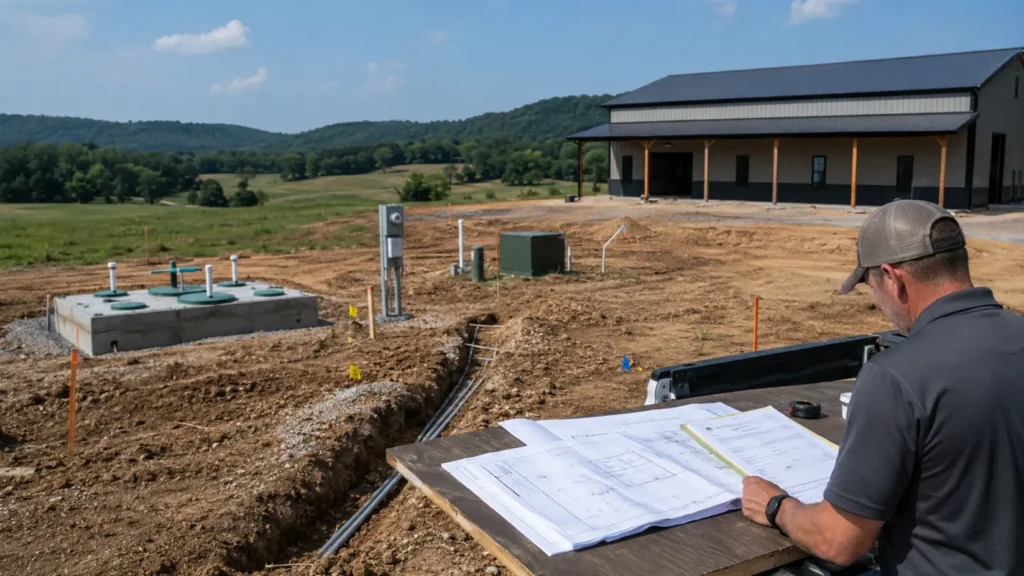
How to Test Soil Before Designing the Foundation
Soil testing turns guesswork into design data. The right level of testing depends on the site and the size of the building.
- Soil maps: the USDA NRCS Web Soil Survey shows mapped soil types and their engineering ratings, including shrink-swell
- Site inspection: a walk of the parcel to check slope, drainage, rock, fill and existing structures
- Geotechnical investigation: borings and lab tests that measure soil properties at the building location
- Septic soil evaluation: required for on-site sewage design where there is no sewer
Soil maps are a starting point, not a final answer. Mapped soil units cover large areas, and conditions on your building pad can differ. Combining soil testing with land selection and site evaluation before purchase gives you the best chance to avoid an expensive surprise.
Barndominium Foundation Options for Oklahoma Soil
There is no single best foundation type for every Oklahoma site. The right design comes from the soil data, the building loads and the site’s drainage. An engineer chooses the system and the details.
Common approaches include:
- Reinforced slab-on-grade with thickened edges where soils are stable
- Engineered slabs designed to handle expected soil movement on expansive clay
- Pier-supported foundations that reach deeper, more stable soil or rock
- Removing and replacing problem soil with compacted select fill under the building pad
Steel-frame buildings also add point loads at the columns and anchor bolts that resist wind uplift. A metal home builder in Oklahoma should make sure the foundation is designed for both the soil and the frame’s anchoring needs.
Drainage Is Part of the Foundation
Even a well-designed slab can struggle if water collects around it. Good drainage keeps moisture levels steadier under the building.
- Grade the ground to slope away from the slab on all sides
- Use gutters and downspouts that discharge well away from the foundation
- Avoid planting trees close to the building on clay soil
- Keep irrigation and flowerbeds from soaking one side of the slab
How Shops and Heavy Loads Change Foundation Needs
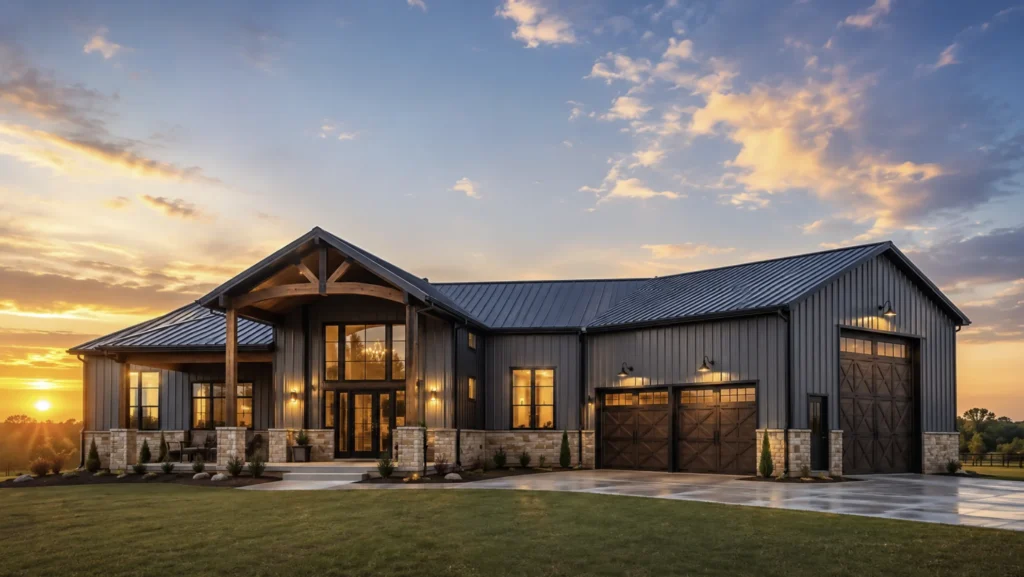
Many Oklahoma barndominiums include a shop for vehicles, equipment or trailers. That part of the slab often carries much heavier loads than the living area, and it may see point loads from lifts, jacks or parked equipment.
Shop areas can call for:
- Thicker concrete or added reinforcement where heavy equipment will sit
- Different slab elevations between shop and living space
- Trench drains or floor slope to move water toward overhead doors
- Careful joint placement to control cracking across a large slab
On expansive clay, a large shop slab and a smaller living slab can also respond differently to soil movement. The engineer should design the whole footprint as one system, so the shop and the home stay level with each other over time.
What Foundation Work Means for Cost and Schedule
Soil conditions affect cost. Expansive clay, rock, fill and poor drainage can all add engineering, excavation or materials to a project. A common question is what a barndominium foundation costs, and the honest answer depends on the parcel, which is why site-specific testing and design come before a firm price.
Finding problem soil early is far cheaper than repairing a foundation later. Turnkey barndominium builders that handle site evaluation, engineering and construction together can carry the soil findings straight into the foundation design.
Need a barndominium foundation planned around your site?
Common Soil Mistakes on Oklahoma Building Sites
- Using a standard slab design without any soil information
- Relying on soil maps alone for a large building
- Building on old fill without testing it
- Letting roof water discharge next to the foundation
- Ignoring how rock will affect trenching and septic placement
For a wider look at how soil fits with weather, permits and land across the state, see our article on how building a barndominium in Oklahoma differs from other states.
If you are budgeting, our guide covers the cost to build a barndominium in Oklahoma and where site and foundation work fit into it.
Conclusion
Oklahoma soil ranges from expansive clay to shallow rock to soft bottomland, often within the same region. Each condition calls for a different foundation approach, and the only reliable way to choose one is to know what is actually beneath the building site. Start with soil maps, confirm with site inspection and testing, and let an engineer design the foundation and drainage around the results. That sequence protects the slab, the steel frame and everything built on top of them.
Frequently Asked Questions
What type of foundation is best for a barndominium in Oklahoma?
There is no single best type. Many barndominiums use a reinforced or engineered concrete slab, but expansive clay, rock or fill may call for a different design or piers. The right choice comes from soil testing and engineering for the specific site.
What is shrink-swell soil?
Shrink-swell soil contains clay that expands when it absorbs water and contracts as it dries. Uneven moisture under a foundation can cause the soil to move unevenly, which can crack slabs. Drainage and engineered foundation design help manage that movement.
Is Oklahoma clay soil bad for building?
Not necessarily. Clay soil is common in parts of Oklahoma, and homes are built on it every day. It needs the right foundation design and good drainage, based on testing at the building site.
How do I find out what soil is on my Oklahoma land?
Start with the USDA NRCS Web Soil Survey, which maps soil types and engineering ratings. Then confirm conditions at the building site with a site inspection and, where needed, a geotechnical investigation.
Why is Oklahoma soil red?
The red color comes mainly from iron oxides. In much of western and south-central Oklahoma, soils weathered from Permian red beds, which are iron-rich clays, shales and sandstones. The state’s climate helps preserve that iron in the soil.